
When you decided to read this article, you likely assumed that choice was the result of a deliberate thought process. But a new paper suggests that what we perceive as decision-making might actually be something quite different—a circular interaction between perception and action, rather than a linear sequence of sensing, thinking, and then acting.
Rethinking the 'Sense-Think-Act' Model
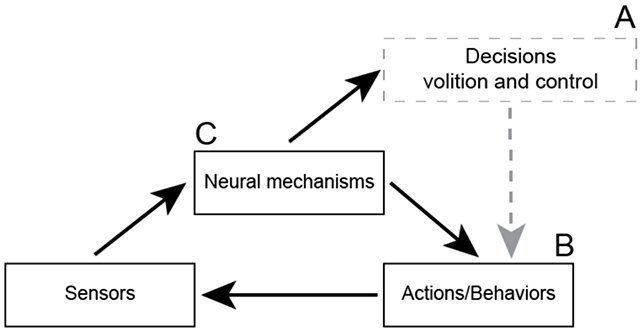
Published in the Journal of Cognitive Neuroscience, the study by neuroscientist Tom James from Indiana University challenges the conventional ‘sense-think-act’ view of brain function, often called the ‘sandwich model.’ This traditional framework posits that sensory input is followed by a distinct cognitive step—deliberation—which then leads to a physical action.
James argues that our feeling of deliberation (like pondering which pizza topping to choose) and the physical choice itself (reaching for ham and pineapple) are not separate events. Instead, they occur simultaneously, triggered by the same neural activity. In essence, there is no middle step between sensing and acting—only the illusion of one.
The Infinite Regress Problem
James critiques the idea that the brain requires a central controller or executive process to make decisions. He explains, “Explaining that the brain works by way of a central controller suggests that you haven’t figured out how the brain works, because you’ve just put a person inside your brain.” This leads to an infinite regress, as that inner person would itself need another controller, and so on. “So the problem is never solved. It’s just passed on,” he adds.
The hypothesis rests on a key distinction: sensory and motor mechanisms are tied to physical, biological machinery—like eyes to see an apple and a hand to grab it—but decision-making lacks such a physical anchor. While we experience decisions and they do occur, the neural basis may not involve a dedicated decision-making process.
Analogies to Illustrate the Abstraction
James offers analogies to clarify his point. One compares brain decision-making to saying “the university decided to close early.” This phrase is useful shorthand, but it abstracts away the many meetings, calls, and interactions that actually produced the outcome. Similarly, treating the brain as having a separate decision-making moment may be an abstraction that obscures the real neural events.
Another analogy involves robots. A robot programmed to turn toward targets and avoid collisions might appear to make strategic decisions as it navigates a room, but its behavior emerges from simple rules, not an internal decision-maker. “It looks intentional. It looks strategic. It looks like the robot is making decisions. And yet, it is not,” James says. “The reason we know it is not is that there are no systems built into it to do that.”
Implications for Future Research

James acknowledges that his framework requires testing in actual neuroscience studies, as no experiments or brain scans were conducted for this paper. He suggests that studying choices in more dynamic, real-world settings—rather than controlled lab tests—could be a productive way forward. He also advises future research to avoid assuming that an action, such as a button press or a shift in attention, is preceded by a separate, abstracted decision.
“Our actions feel like they are caused by decisions based on desires, beliefs, and intentions,” James notes. “As mental phenomena, [decisions] are defined on too abstract a level for the goals of cognitive neuroscience.”
The full study is published in the Journal of Cognitive Neuroscience.