
Out-of-Body Experience Study: Hidden Image Test Fails, But Two Participants Report Impossible Observations
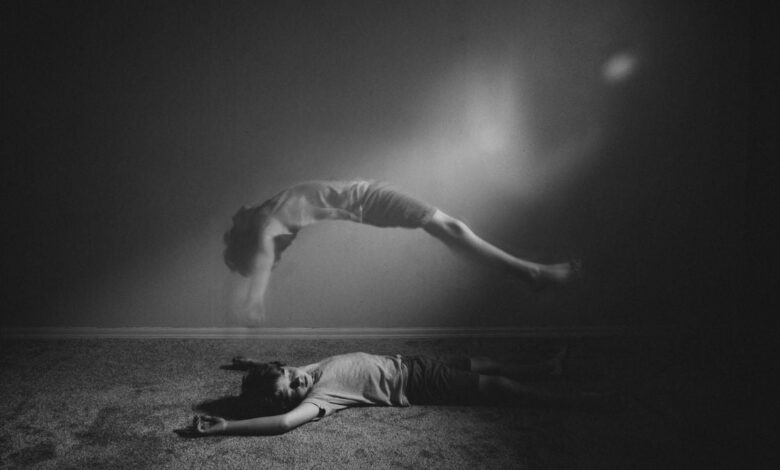
Some people claim they can leave their bodies and observe the world from a different vantage point. This phenomenon, known as an out-of-body experience, has deep roots in spiritual and esoteric traditions but has never been scientifically verified. It raises puzzling questions: How can you see when your eyes are closed in another room? And what exactly are you seeing?
Researchers have been trying to answer these questions experimentally for decades. Now, a team led by neuroscientist Marina Weiler of the University of Virginia has conducted a carefully blinded experiment with 21 experienced out-of-body practitioners. The setup included a hidden in another room. Not a single participant succeeded at the given task. However, two of them reported seeing something else that should have been impossible—and the researchers can’t quite explain it.
“I hope this study encourages researchers to think creatively about how we test these experiences,” Weiler says. “The unexpected findings give us a potentially useful new direction, but they also need to be tested prospectively and under rigorous conditions before we can know what they mean.”
A History of Testing the Impossible

Scientists have tried to test claims of perception during out-of-body experiences for decades. The phenomenon lends itself to a deceptively simple experimental protocol: conceal something from a person’s physical senses and ask them to describe it. One particularly famous—and hotly debated—1968 study involved a subject known only as Miss Z, who supposedly correctly recited a randomly generated five-digit number that had been hidden from view. Subsequent attempts to demonstrate the same kind of extrasensory perception have produced mixed, contested, and often inconclusive results.
A Three-Room Obstacle Course

Weiler and her colleagues designed a study that could be described as an out-of-body obstacle course spread across three rooms. The first room was where each participant was placed while attempting to demonstrate their abilities. They were hooked up to an EEG machine to record brain activity, but otherwise were free to make themselves comfortable—on a bed or armchair, with their preferred lighting and temperature conditions. The researchers occupied the second room, with the door closed. Finally, the third room contained the target: a laptop displaying one randomly selected from a pool of 100 objects, with the screen turned toward a wall to prevent any inadvertent glimpses.
Not even the researchers knew which was displayed. One of them would initiate the randomization program, turn the laptop toward the wall, and leave before the appeared. It remained unknown to everyone involved until the analysis phase months later. At that point, the participant remained in the room for 60 to 90 minutes, to show they could see an on a computer screen facing a wall in a closed room 7 meters (23 feet) down a hallway.
Results: No Evidence of Accurate Perception

After all that, just 13 of the 21 participants reported impressions they believed were related to the hidden target. And only 8 of those 13 said they had actually experienced an out-of-body experience. The other five described something more like an internal “mental screen” or “inner vision,” seeing clues to the target without feeling as though they had left their bodies.
The researchers asked the participants to describe their impressions of the target—for example, if the object was an apple, you might expect someone who perceived it to report something red and round. To remove subjective human judgment from the equation, the researchers then used AI to compare each participant’s description against descriptions of all 100 possible target images, ranking them according to how closely they matched. The real target should have ranked unusually highly if the participant had accurately perceived it; instead, the correct images ranked anywhere from 16th to 92nd, with the results overall no better than guessing. As a control, when the same system was given accurate descriptions of the images, it had little trouble picking out the correct targets. So, whatever the participants thought they had perceived, there’s no evidence that it was the object displayed on the laptop.
Unexpected Observations in Room 2

Although none of the participants showed evidence of accurately perceiving the target in Room 3, the experiment involved another room. Two of the participants reported impressions of what the researchers were doing in Room 2. Participant 7 described one researcher sitting to the left, focused on a computer screen, while the other sat farther back in a corner, reading a book—a configuration that hadn’t occurred during previous sessions. And that’s exactly where they were during 7’s attempt. Participant 13 separately reported seeing one researcher on the right, taking notes, and the other on the left at the computer. Again, the description matched what the researchers were actually doing during that participant’s session—and again, their positions were different from their usual arrangement.
Which is actually pretty weird. But weird isn’t proof. These observations were spontaneous, rather than part of the experiment’s predetermined targets, and weren’t subjected to statistical analysis. The researchers therefore describe them as anecdotal—interesting, but inconclusive.
A Similar Case from the 1960s
Intriguingly, the researchers note that something similar happened during an experiment with famed out-of-body practitioner Robert Monroe in the 1960s. Monroe failed to perceive the hidden target, but reported seeing a technician with an unfamiliar man outside the room where he expected to find her. The man was indeed there—he was the technician’s husband, whom Monroe had not previously met. The original researcher, psychologist Charles Tart, nevertheless considered the evidence weak, noting that Monroe could have heard the visitor during a break.
Rethinking the Targets
Still, it raises the interesting possibility that the targets used in out-of-body-experience studies may be part of the problem. Perhaps a static screen or list of numbers simply isn’t salient enough to attract attention during the experience.
“I hope these findings encourage us to think more deeply about what they might mean for our understanding of consciousness and, ultimately, the nature of reality,” Weiler says. “At its deepest level, this research is not only asking whether out-of-body experiences are real. It is asking what we mean by ‘real’ in the first place, and whether our current understanding of reality is broad enough to account for everything human consciousness can experience.”
The findings have been published in Explore.