Quantum computers exist today, but they remain highly specialized and far from practical, covering only a small fraction of the performance that scientists believe the technology could eventually achieve. A major hurdle lies in understanding quantum materials, which can host several competing electronic states. A new study published in Nature Physics takes a closer look at how two such states can emerge and coexist in the same material.
An international team of researchers investigated two charge density wave (CDW) phases—relatively simple forms of collective electron behavior—as a model for understanding phase competition in more complex quantum materials, including those with superconductivity and magnetism.
“Just like superconductivity, charge density waves are a collective phenomena where electrons move together in certain ways,” says physicist Yifan Su from MIT. “The power of CDWs is that they are a much simpler form of matter compared to superconductivity. They offer a playground for fundamental understanding.”
Erbium Tritelluride: A Host of Two Quantum Phases
For their experiment, the researchers chose erbium tritelluride, a material already known to simultaneously hold two CDW orders—different electron density patterns that influence the material’s behavior—defining two distinct quantum phases. One dominant CDW develops below about –8 °C (18 °F). A second CDW appears below about −113 °C (–171 °F), running perpendicular to the first through the crystal and creating a ‘checkerboard’ pattern.
These competing, coexisting CDWs require those cold temperatures to appear, but they are difficult to study in a normal, equilibrium state. “The mechanism responsible for the emergence of this second phase has long been debated, and our approach provides a powerful new way to uncover the hidden physics behind phase transitions in quantum materials,” says physicist Nuh Gedik from MIT.
A One-Two Punch of Laser Pulses
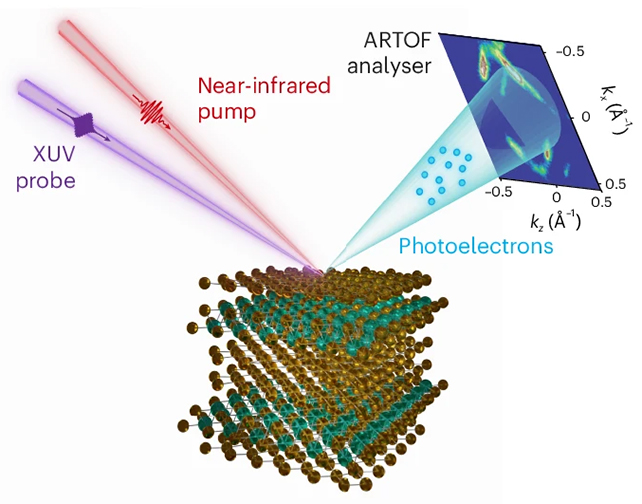
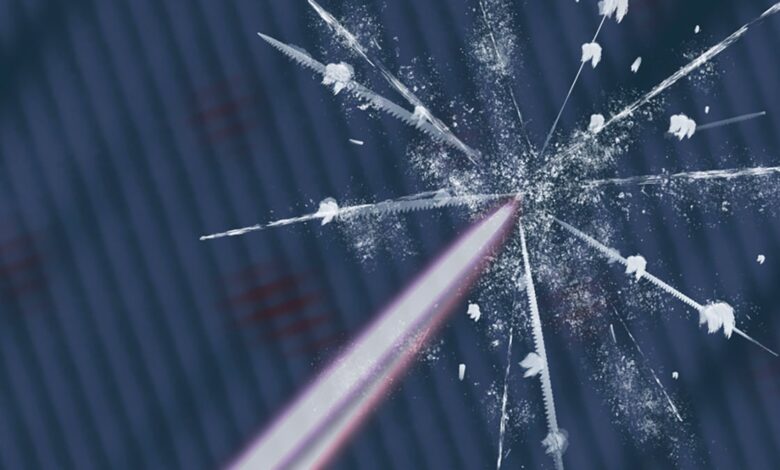
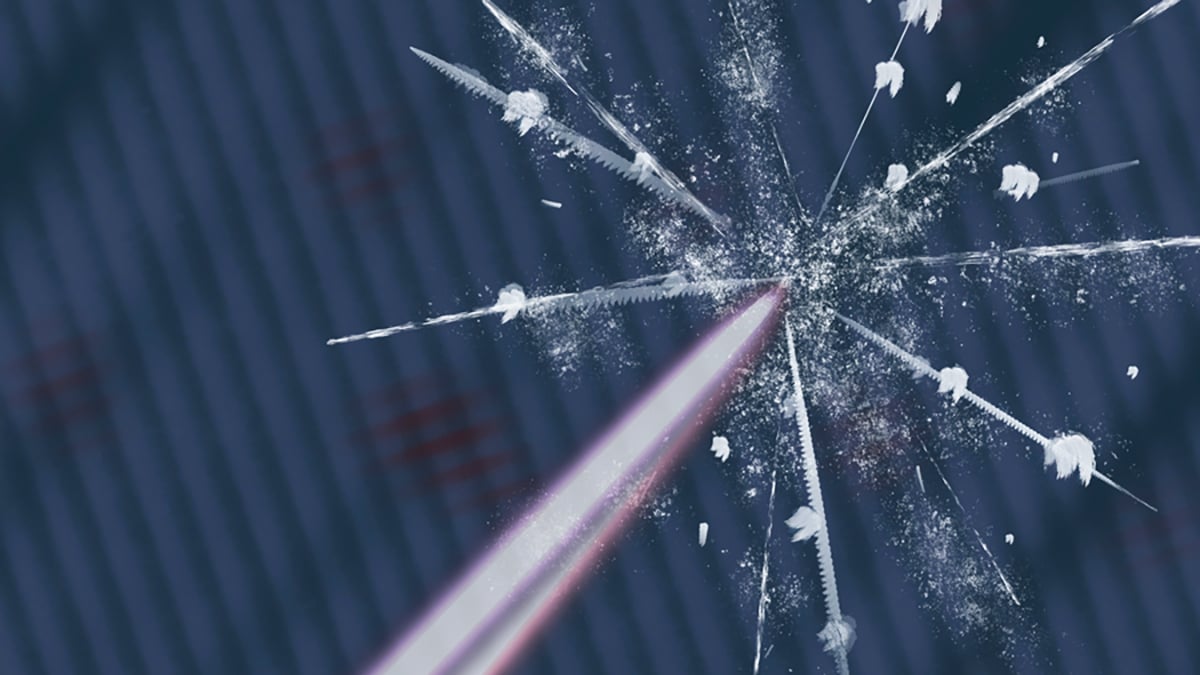
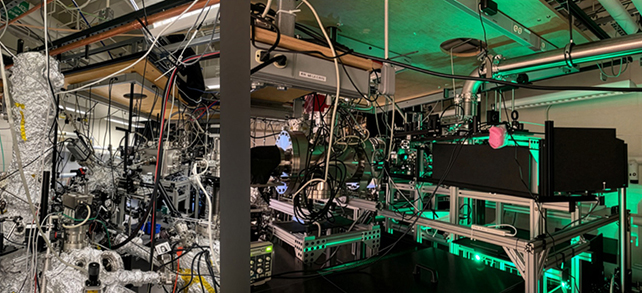
To observe what was happening, the team used a one-two punch of short, intense laser pulses. The first pulse shook up the ‘checkerboard’ of criss-crossing electron phases, forcing them to reform. The second pulse measured the reconstruction of the CDWs.
While the first, dominant phase returned gradually and uniformly as expected, the second phase behaved unusually: it came back in isolated pockets that then spread through the material, similar to crystals of ice appearing as water freezes. The results suggest the two CDW phases form through fundamentally different mechanisms.
“One of the biggest questions in physics is why some materials host multiple phases while others do not,” says Gedik. “And when multiple phases do exist, how do they interact? Do they reinforce one another, compete, or co-exist independently?”
Why This Matters for Quantum Materials
These phases are what make quantum materials so special—and potentially so useful. Knowing more about them could ultimately help us understand how to initiate and control them.
“In systems that are much more complex, like high-temperature superconductors, you see there are multiple phases—magnetism, superconductivity, charge density waves, and they all exist together,” says Gedik. “One of the theories is that the way they interact with each other is key for their exotic properties. The lessons we learn here can be applied to much more complex materials.”
Future studies could analyze those more complex materials using the same laser-pulse approach, the researchers suggest, revealing more about how quantum materials develop their characteristics. That could also be useful for electronics: further down the line, it might be possible to replace the silicon chips of conventional systems with different, superior materials—but only if we are able to build and control them with very specific precision.
“People believe the cornerstone of replacing silicon lies in quantum materials that have multiple coexisting phases,” says physicist Alfred Zong, who co-led the study as an MIT graduate student and is now at Stanford University. “Our experiment provides a very neat way to study these multiple phases.”
The research has been published in Nature Physics.