
Do you find yourself repeating the same relationship mistakes, whether it’s anxiously waiting for a text or pulling away when someone gets too close? The problem may not be your partner, but an internal blueprint known as your attachment style. Understanding this concept can be the key to breaking free from toxic cycles and finding a secure, fulfilling relationship.
What Is Attachment Theory?
Attachment theory suggests that our early interactions with caregivers shape how we approach relationships in adulthood. These patterns can influence whether we feel secure, anxious, or avoidant in romantic partnerships. Recognizing your attachment style is the first step toward changing unhealthy dynamics.
The Anxious Attachment Style: Craving Intimacy, Fearing Abandonment
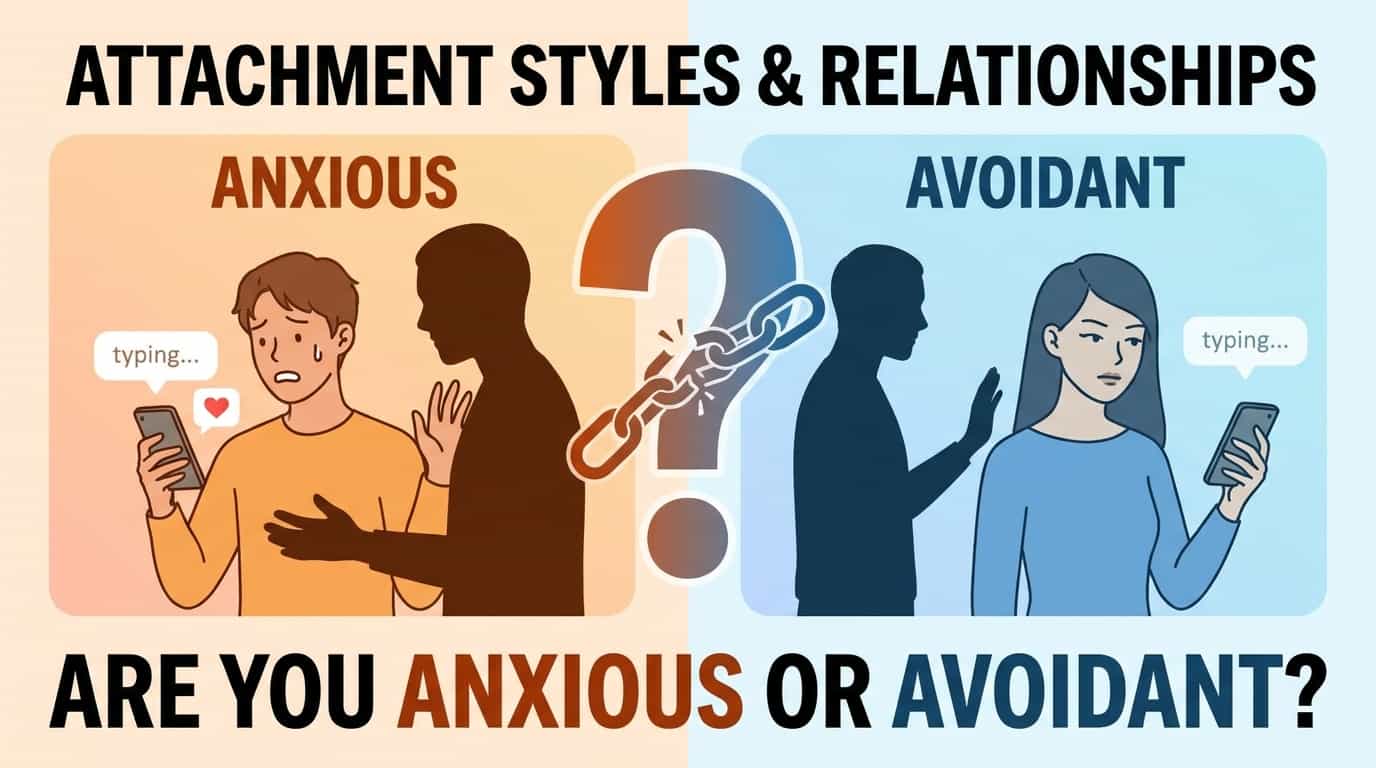
If you often assume the worst when a partner doesn’t reply quickly, or you start arguments just to feel the rush of making up, you may have an anxious attachment style. You crave closeness but live in constant fear of being left. This can lead you to mistake drama for passion and anxiety for love.
Signs You Are Sabotaging Your Relationship
- Protest Behavior: You send a “we need to talk” text when you really just want reassurance.
- The Scorekeeper: You tally up who does what for whom, turning love into a transaction.
- The Test: You push people away to see if they’ll fight to stay, and if they don’t, you think, “I knew they’d leave anyway.”
How to Fix It
You need a partner who offers consistency, not chaos. When panic rises, force yourself to wait 24 hours before reacting. In that time, ask yourself: Is this a real threat, or am I just hungry for attention?
The Avoidant Attachment Style: Valuing Independence, Fearing Closeness
Do you feel suffocated when someone gets too close? Do you have a “phantom ex”—an idealized former lover that no current partner can live up to? If so, you might be avoidant. You prioritize independence above all else, but you sabotage relationships by keeping one foot out the door. You may view vulnerability as weakness and shut down during conflict.
Signs You Are Sabotaging Your Relationship
- The Ick: You suddenly lose attraction the moment someone treats you well.
- The Escape Hatch: You constantly critique your partner’s flaws (e.g., their laugh, their shoes) as a justification to leave.
- Emotional Numbing: You stonewall during arguments, leaving your partner feeling unheard.
How to Fix It
Stop romanticizing the “perfect” ex who left you alone. Recognize that your desire for “space” is often a defense mechanism. Try verbalizing your need for a short break before you hit your breaking point. Saying “I need 30 minutes to think” is secure; disappearing for 3 days is not.
The Anxious-Avoidant Trap
Here’s the brutal truth: Anxious and avoidant people are magnets for each other. The anxious partner chases the avoidant, confirming their fear that love requires struggle. The avoidant partner gets chased, confirming that relationships are suffocating. This creates a toxic loop where intimacy feels like a game of cat and mouse.
Can an Anxious Person Date an Avoidant?
Yes, but only if both parties are actively self-aware. Without therapy or conscious effort, this pairing usually results in a high-conflict, emotionally exhausting cycle that can last for years without true happiness.
5 Steps to Break the Cycle Today
You are not broken, but your wiring needs an upgrade. Here’s how you move from “toxic” to “secure.”
- Stop Dating Potential: Date the person in front of you, not the fantasy of what they could be if they “just changed.”
- Call Out Your Own BS: When you feel the urge to run (avoidant) or cling (anxious), say it out loud: “I am feeling triggered right now.”
- The 70/30 Rule: In a healthy relationship, you shouldn’t feel anxious more than 30% of the time. If you are constantly on edge, it’s a compatibility issue, not a love issue.
- Choose Boring: Secure love often feels “boring” to anxious and avoidant brains because it lacks the cortisol spike of drama. Stop mistaking peace for boredom.
- Get Therapy: Seriously. You cannot read your way out of a subconscious wound. You need a professional to rewire the brain.
The Bottom Line
Your attachment style is not your fault, but it is your responsibility. If you keep finding yourself crying in the bathroom at parties because your partner looked at someone else, or if you break up with everyone the moment things get real—it’s time to look in the mirror. The love you want is on the other side of the fear you are holding onto.