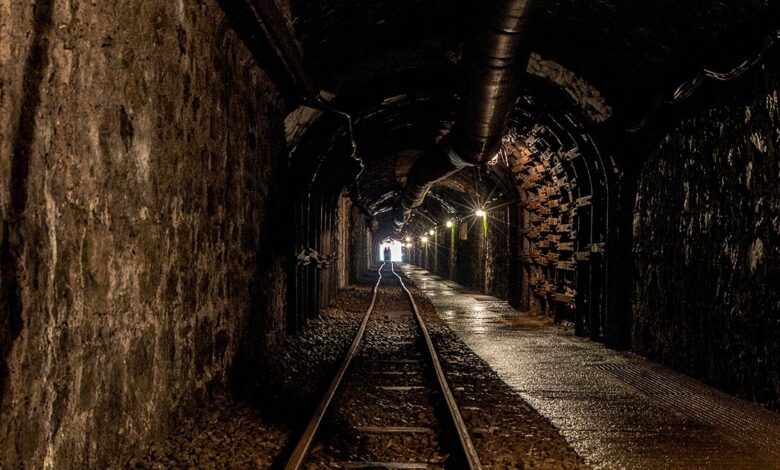
China has more than 12,000 abandoned coal mines, and a team of researchers sees potential in their vast underground networks. The proposal, from the Shanxi Province Coal-based Resources Green and High-efficiency Development Engineering Center, is to convert these tunnel and cavern systems into agricultural experiment stations—essentially farming laboratories.
Why Underground Farming Makes Sense

The most obvious obstacle is the absence of sunlight and rainfall, both typically essential for agriculture. However, the researchers point out that subterranean environments offer distinct advantages: they can be precisely controlled and are shielded from weather fluctuations, climate change impacts, and natural disasters.
“Against the backdrop of intensifying global climate change and growing agricultural demand in extreme and enclosed environments, exploring experimental agricultural models in coal mine underground spaces carries important scientific significance and engineering value,” the team writes in a paper published in China Mining Magazine.
Assessing Which Mines Could Work

Not all of the 12,000 mines are suitable for conversion. The researchers evaluated them using criteria including structural safety, the feasibility of turning abandoned mines into agricultural units, and the practicality of managing light, heat, water, air, and carbon dioxide. Ventilation and drainage were also considered.
Their conclusion: at least some mines could provide stable enough environments to test new farming approaches—methods that may become increasingly important as the climate shifts.
“The results show that coal mine underground spaces possess the engineering foundation for constructing agricultural experimental units when the surrounding rock stability meets engineering specifications, and ventilation, drainage, and safety monitoring systems are complete,” the researchers write. “Through artificial light sources and environmental control systems, underground spaces can realize the independent supply and precise regulation of key production factors such as light, heat, water, air, and carbon, thereby supporting the implementation of highly controllable agricultural experiments.”
Geothermal Energy and Water Reuse

Farming underground could also tap into geothermal energy as a sustainable heat source for crops, with far fewer greenhouse gas emissions. Additionally, contaminated groundwater that seeps into the mines—carrying sulfates, metals, and other particles—could be treated on-site and reused for irrigation.
The goal is not full-scale crop production but rather research projects that test different ways to grow food in various settings.
“The introduction of agricultural systems into the underground space of coal mines aims not to achieve traditional agricultural production, but rather to construct an agricultural scientific experimental platform for extreme and enclosed environments,” the researchers explain.
A Growing Opportunity
According to the South China Morning Post, the number of closed mines in China could reach 15,000 by the end of the decade, representing around 7.2 billion cubic meters (254 billion cubic feet) of unused space.
Challenges remain, and the researchers have not yet conducted field tests. But the feasibility study points to the Callio project in Finland—a successful mine conversion—as an example of what is possible.
Eventually, knowledge gained from underground farming could inform future approaches to growing crops in extreme environments, whether in space or in remote areas unsuitable for traditional agriculture.
“Overall, coal mine underground spaces can serve as an important carrier for highly controllable agricultural experiments, providing a new approach for agricultural mechanism research in extreme environments and the reuse of underground space resources,” the researchers conclude.
The research has been published in China Mining Magazine.