
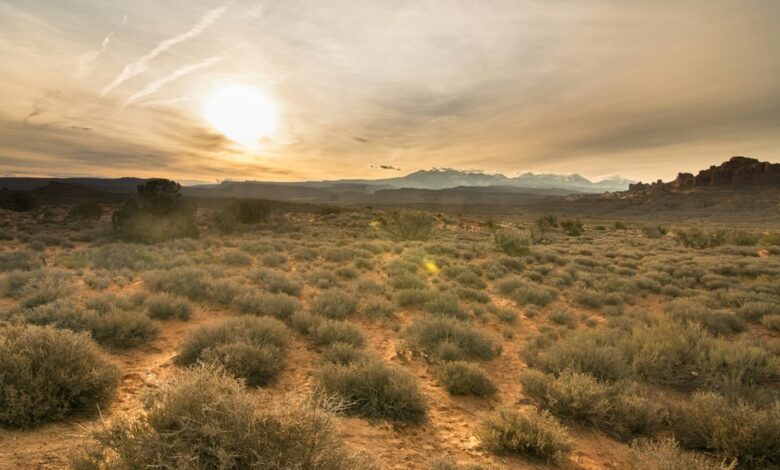
As global temperatures rise, many of the planet’s driest regions are expected to become even drier, causing the boundaries of arid zones to creep into neighboring areas. This shift could transform landscapes and threaten plant life that cannot adapt. According to a new study published in Environmental Research Letters, Earth’s drylands might expand to cover more than 40 percent of the planet’s land area by the end of the 21st century. However, in an unexpected twist, the researchers suggest that rising carbon dioxide (CO2) levels—the primary driver of climate change—may actually be slowing this expansion.
Understanding Drylands and Their Measurement
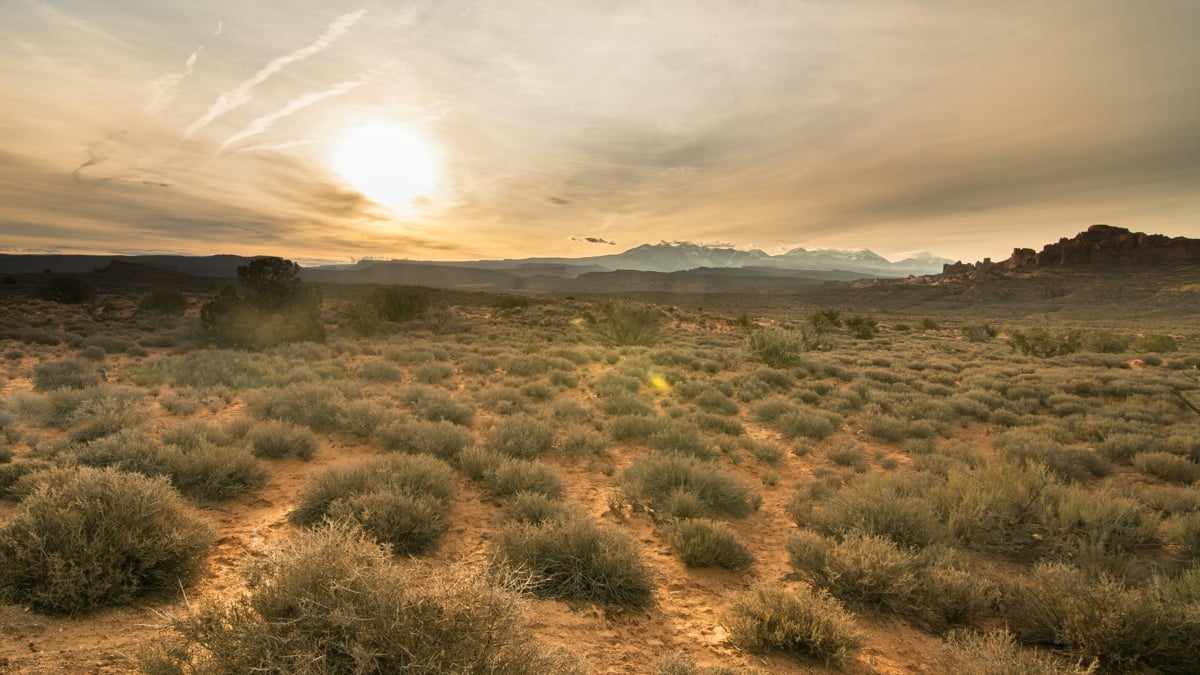
Drylands are regions characterized by significant water scarcity, where precipitation is low relative to the potential loss of water through evaporation and plant transpiration. While the concept is well-established and scientists broadly agree on the locations of major drylands, variations in measurement techniques and climate data lead to substantial differences in global estimates of dryland coverage.
The study, led by scientists from the Chinese Academy of Forestry, emphasizes the need for a common framework. “Expansion of dryland climatic conditions into formerly more humid regions may aggravate water scarcity, ecosystem degradation and desertification, posing challenges to global sustainable development,” the team explains. “Given the high ecological vulnerability of drylands, updated assessments of dryland extent and future redistribution are needed to support climate adaptation and sustainable development.”
How the Study Was Conducted
The researchers used updated climate modeling to map current global dryland distribution and project future changes. They defined drylands using the aridity index (AI), which is the ratio of precipitation to potential evapotranspiration (PET). Areas with an AI below 0.65 are classified as drylands.
One factor contributing to the variance in dryland projections is the effect of rising atmospheric CO2 levels on plant transpiration. When CO2 concentrations are high, the pores on plant leaves, called stomata, partially close, reducing water loss through transpiration. This affects PET calculations, but the team notes that many previous studies have not accounted for this effect.
“Conventional projections often neglect CO2 effects on potential evapotranspiration, which may yield higher aridity estimates and alter aridity-change hotspot patterns,” the authors write.
In their analysis, the researchers employed a CO2-modified PET framework, incorporating historical meteorological data from 1960 to 2023 and climate models from the sixth phase of the Coupled Model Intercomparison Project (CMIP6).
Current Dryland Coverage and Future Projections
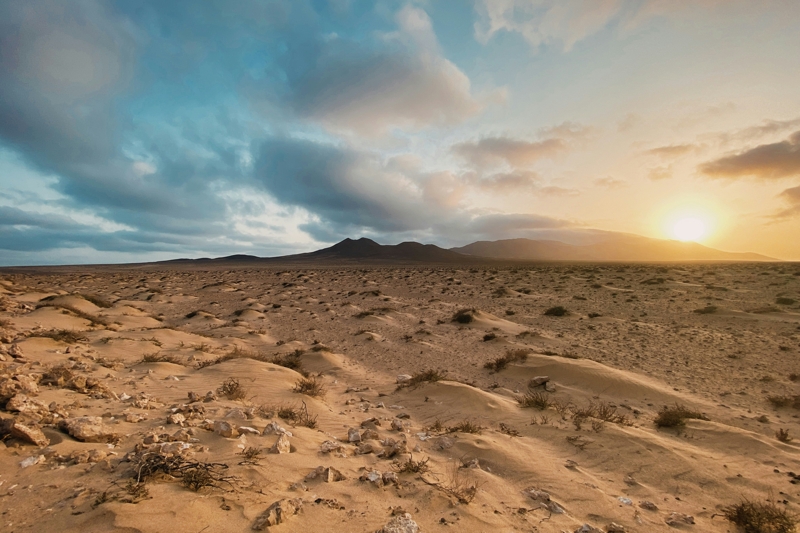
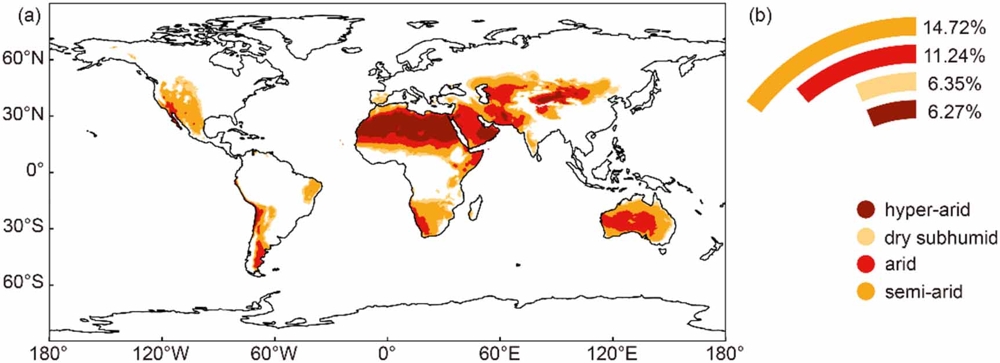
Based on a baseline period of 1994–2023, the study estimates that drylands currently cover about 38.58 percent of Earth’s total land area, excluding Antarctica. Drylands are categorized into four sub-types, with semi-arid zones being the most extensive, covering 14.72 percent of terrestrial area. Arid zones, predominantly in Australia and China, account for 11.24 percent, while dry sub-humid zones are widespread in China and Russia, covering 6.35 percent. Hyper-arid zones, found in Algeria, Libya, and Saudi Arabia, make up 6.27 percent of terrestrial coverage.
Looking ahead, the researchers project that drylands will expand to cover between 39.31 and 40.28 percent of Earth’s land during 2071–2100, depending on the greenhouse gas emissions scenario. Hyper-arid zones are expected to see the largest increase.
Implications and Regional Impacts

While the trend is concerning, the CO2-modified PET calculations used in this study yield figures significantly lower than some earlier estimates. A study from a decade ago suggested drylands could cover up to 56 percent of Earth’s land by 2100. Nevertheless, the upper estimate of 40.28 percent represents an increase of 2.37 million square kilometers relative to the 1994–2023 baseline—an area roughly the size of Algeria or about 30 percent of Australia.
Australia, despite being the world’s driest inhabited continent, is projected to experience the most pronounced dryland changes this century, followed by Brazil. Parts of Africa are also expected to see widespread shifts.
The findings are reported in Environmental Research Letters.