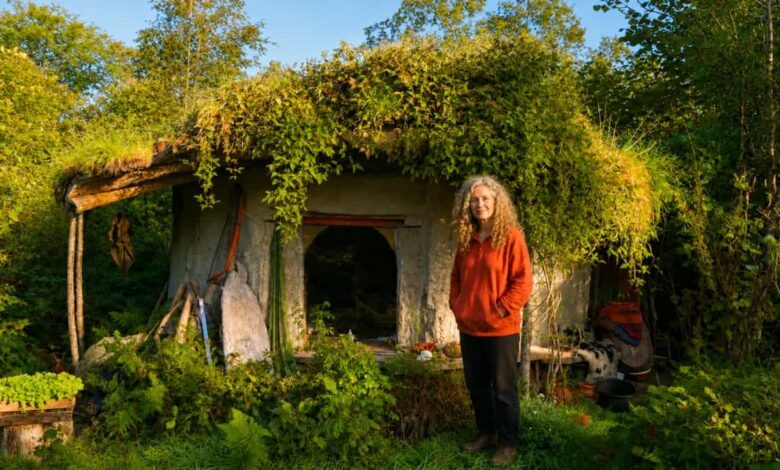
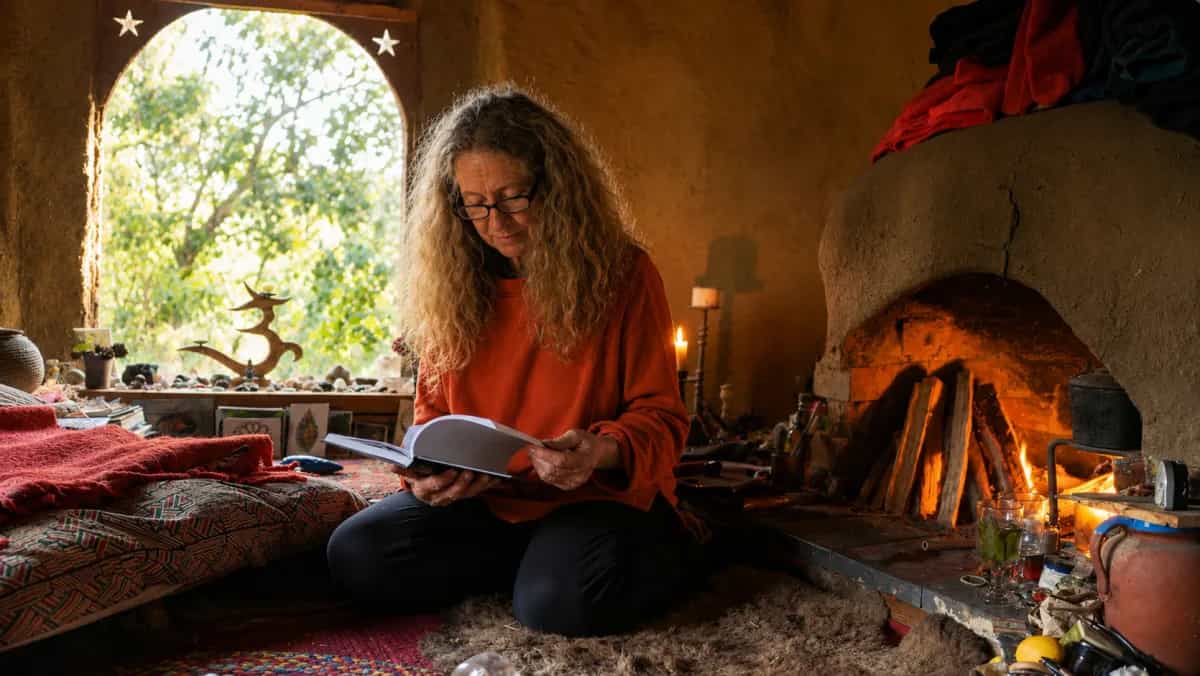
While the majority of society can scarcely fathom existing without power or indoor plumbing, one woman has actively forged this exact reality deep within the forests of Wales. Residing in a compact, self-constructed cabin nestled among the trees, Emma thrives in an environment devoid of what modern culture deems fundamental necessities—completely forgoing artificial lighting, standard pipes, and telecommunications. To sustain herself, she harnesses fire for heating and meal preparation, harvests freshwater directly from the environment, and incorporates organic elements into every corner of her dwelling. This off-grid existence was not an instantaneous shift. Rather, it is the culmination of years spent testing various construction methods, slowly shaping a sanctuary perfectly aligned with her vision of living. Externally, the miniature structure appears to have been plucked directly from the pages of a fairytale. Camouflaged seamlessly within the woodland landscape, it features a rustic roof and walls crafted from raw timber and straw. Yet, the true marvel lies beyond the threshold. Even without modern amenities and within such a confined footprint, Emma has curated a surprisingly inviting and snug interior. Witnessing the careful craftsmanship behind her off-grid haven makes it entirely clear why she opted for such a remarkable way of life. Constructing a Home from the Ground Up Emma possessed no formal architectural or construction background when she embarked on this journey. Instead, her expertise was forged through hands-on trial and error, learning from inevitable missteps as she progressed. Through this experiential process, she mastered the use of organic materials, ultimately cultivating her own distinctive methodology for erecting modest woodland shelters. Resting atop a solid wooden deck, the cabin relies on robust timber framing to brace its straw-bale walls. These surfaces are finished with a raw, earthen plaster that grants the interior a deeply inviting and grounded aesthetic. However, this choice of material presented a significant hurdle: natural plaster is highly vulnerable to water damage. To combat the notoriously damp Welsh climate, Emma engineered a roof featuring an exaggerated overhang, acting as a deep, protective canopy to shield the exterior from heavy rains. Furthermore, this roof integrates seamlessly with the forest backdrop, anchoring the dwelling firmly within its natural surroundings. Stepping indoors reveals an equally unconventional approach to spatial layout. Rather than attempting to cram standard household amenities into such a restricted footprint, Emma adopted a philosophy of strict intentionality. Within these walls, every single item must perform a crucial function, leaving zero tolerance for superfluous clutter or decorative excess. A Purpose-Driven Interior Crossing the threshold of Emma's cabin offers an experience far removed from standard residential living. Rather than attempting to mimic the layout of a traditional house on a micro-scale, the compact interior is unapologetically tailored to her specific daily rhythms. Bulky furnishings and extensive banks of cupboards are entirely absent. Emma firmly believes that overstuffing a restricted area with frivolous items would severely hinder mobility and flow. Consequently, her possessions remain sparse, functional, and stored out in the open. This extreme minimalism demands a continuous audit of her belongings; anything devoid of immediate utility or deep personal significance is swiftly discarded to preserve her highly coveted square footage. Adding to the dwelling's exceptional character is its architectural geometry: the primary living area is entirely circular. Emma notes that inhabiting a rounded structure cultivates an ambiance profoundly distinct from the sharp, confining corners of a standard rectangular room. Following years of meticulous adjustments, she now considers her creation a masterpiece of comfort and rustic beauty. This charm is only magnified when temperatures drop, as a crackling hearth not only heats the snug sanctuary but also dictates the comforting rhythm of her daily winter chores. An Existence Without Running Water Perhaps the most striking departure from conventional living becomes apparent when considering modern plumbing: it is entirely absent. Instead of simply turning a tap, Emma relies on harvesting rainwater runoff from her canopy roof for storage. To supplement this, she draws fresh hydration directly from the surrounding landscape, gathering water from a local river and a nearby cascading waterfall. Her approach to personal hygiene demands similar ingenuity. Bathwater must be heated over an open flame, complementing the property's rustic sauna and open-air washing facilities. Sanitation is equally unorthodox; rather than relying on a standard sewer-connected indoor restroom, she utilizes an external composting toilet system. While outsiders might perceive this as a severe hardship, Emma has seamlessly woven these manual processes into the natural rhythm of her daily existence. This perspective is fundamental to grasping the essence of her lifestyle. She did not merely strip a standard residence of its wiring and pipes; rather, she intentionally engineered a life that renders them obsolete from the start. However, this off-grid independence is far from passive. The onset of winter dictates rigorous physical labor, demanding the constant chopping and stockpiling of firewood for survival. Every drop of water requires gathering, hauling, and mindful consumption. Genuine comfort certainly exists within her woodland retreat, but it is a comfort strictly earned through dedicated, daily effort. The Appeal of an Off-Grid Existence The most immediate question for any observer is undoubtedly: why voluntarily surrender the effortless comforts of the modern era, such as electricity and indoor plumbing? For Emma, the motivation extends far beyond merely inhabiting a quirky shelter. Her ultimate goal was to forge a deeply simplified reality, intimately intertwined with the natural environment. Gradually, she grew disillusioned with the relentless financial burdens and complicated logistics that define traditional homeownership. Her compact cabin provided the perfect vehicle for this transformation. The severe spatial limitations naturally prevent the hoarding of material goods. Without artificial lighting to artificially extend the day, her schedule is organically dictated by the rising and setting of the sun. Furthermore, because basic survival demands physical exertion, she maintains a profound, ongoing dialogue with the earth. What mainstream society might view as grueling hardships have simply become the standard, grounded rituals of her daily life. This doesn't imply that Emma advocates for a mass exodus to the forest. Yet, after years of embracing this minimalist path, she realizes she scarcely yearns for the so-called essentials she left behind. In truth, she considers her unconventional lifestyle to be immensely luxurious. This is not luxury defined by opulent furnishings or high-tech gadgets, but rather the ultimate privilege of true autonomy—possessing a home that grants her the absolute freedom to exist exactly as she chooses.